
I. Introduction: Are Your Product and Marketing Teams Rowing in Opposite Directions?
What if your marketing team’s most successful campaign, the one with a record-low Cost Per Acquisition (CAC), was actually hurting your business by acquiring users who churn at twice the average rate? For many siloed companies, this isn’t a hypothetical; it’s a hidden and costly reality.
This is the “Growth Chasm”: a deep, operational divide between Product and Marketing teams. In many organizations, these two critical functions operate in different worlds, are measured by different metrics, and use different data platforms. Marketing celebrates a “signup” driven by a clever campaign, while the Product team is left wondering why that same user never activated, engaged with key features, or retained beyond the first week.
The strategic cost of this silo is immense. It leads directly to wasted marketing spend on channels that attract low-value users, misaligned product roadmaps building features for the wrong audience, higher customer churn, and ultimately, stalled and unprofitable growth. When your teams are not looking at the same picture of the customer journey, they cannot effectively work together to improve it.
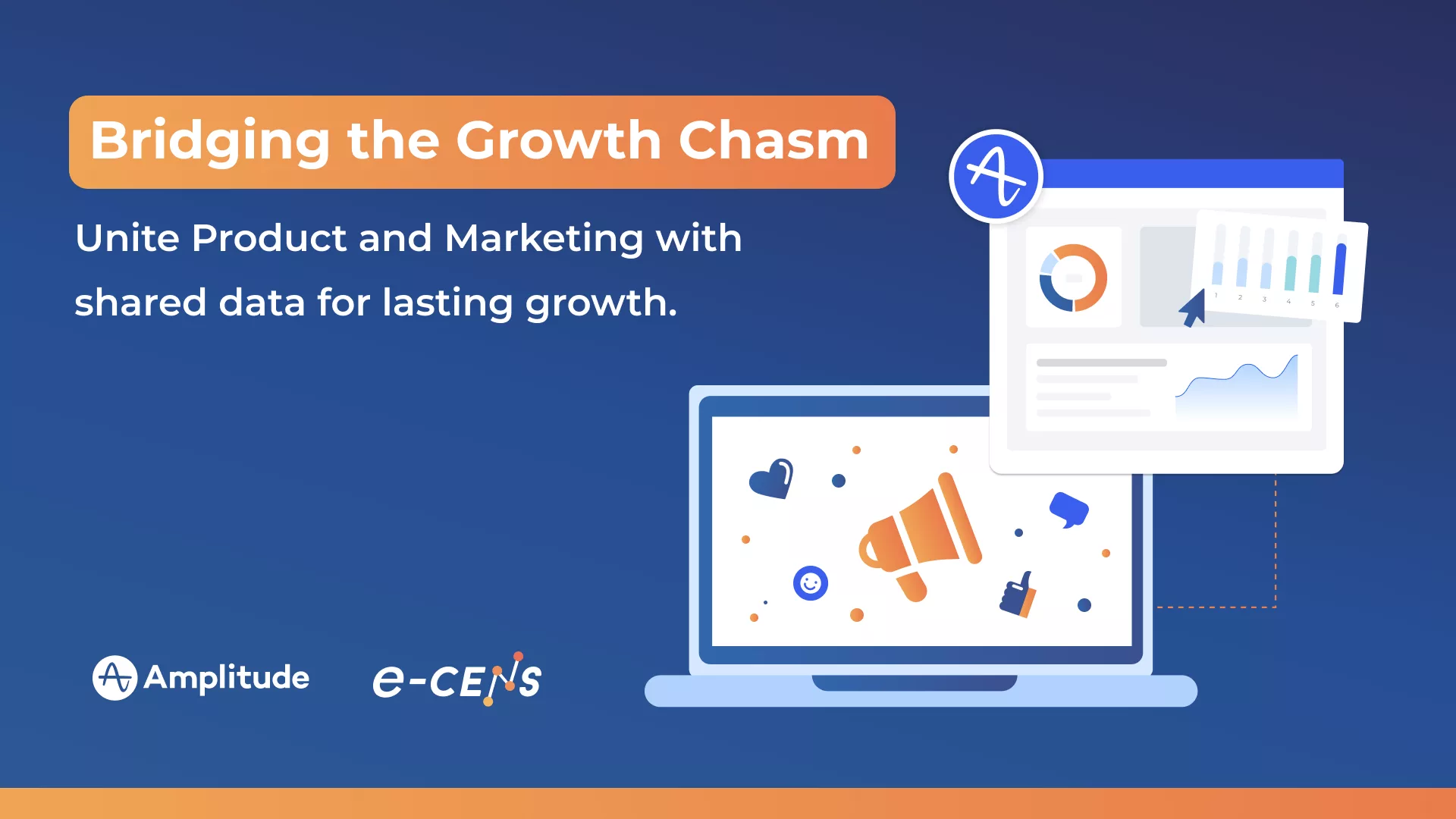
This post provides a strategic playbook for bridging the Growth Chasm. We’ll diagnose the root causes of this common organizational silo and show how a unified behavioral data platform can align your teams, creating a single, powerful engine for sustainable, profitable growth.
II. Diagnosing the Chasm: The Root Causes of Misalignment
The chasm between Product and Marketing doesn’t arise from a lack of effort or talent; it’s the natural consequence of a fractured operational foundation. The misalignment is almost always rooted in two fundamental problems: disconnected data and, as a direct result, divergent goals.
1. The Data Silo Problem: Two Incomplete Pictures of the Same Customer
The core of the issue is that each team is often looking at a different, incomplete part of the customer journey through the lens of their own specialized tools.
- Marketing’s View: Marketing teams typically live in platforms like Google Analytics, various ad network dashboards, and their CRM. Their world is focused on top-of-the-funnel data: impressions, click-through rates, website sessions, and initial conversions like a form fill or a signup.
- Product’s View: Product teams, on the other hand, live in product analytics platforms like Amplitude. Their focus is on in-product engagement data: user activation, feature adoption, frequency of use, and retention patterns.
Without a bridge between these systems, you are left with two separate and incomplete narratives. Marketing knows how a user arrived, but not what they did next. Product knows what a user did, but not where they came from or what motivated them to sign up. This creates a blind spot at the most critical handover point in the customer lifecycle.
2. The Metric Misalignment Problem: Optimizing for Conflicting Outcomes
This data silo inevitably leads to teams optimizing for different, and often conflicting, success metrics.
- Marketing’s Incentives: A marketing team is often measured and bonused on their ability to lower CAC, increase the volume of Marketing Qualified Leads (MQLs), and drive a high number of total signups. Their goal is often volume and top-of-funnel efficiency.
- Product’s Incentives: A product team is measured on its ability to improve user activation rates, drive adoption of key features, and increase long-term user retention. Their goal is depth of engagement and long-term value.
When these goals are not connected by a shared data foundation, they can work against each other. A marketing campaign that successfully drives thousands of low-cost signups (a win for Marketing) might consist of users who have no real intent to use the product, leading to a disastrous activation and retention rate (a loss for Product). This misalignment ensures that the organization can never achieve a truly efficient, end-to-end growth engine.
III. The Bridge: A Unified Behavioral Data Platform as Your Single Source of Truth
Addressing the deep-seated misalignment between Product and Marketing requires more than just encouraging better communication or holding more meetings. The chasm is a structural problem caused by a fractured data foundation, and it requires a structural solution. The bridge is a shared data platform that provides a single, continuous view of the entire customer journey, creating a single source of truth for both teams.
While many tools play a role in the MarTech stack, a powerful product analytics platform like Amplitude is ideally positioned to serve as this central hub for understanding user behavior from start to finish.
The Foundational “How-To”: Connecting the First Mile to the Last Mile
The technical key to building this bridge is surprisingly straightforward, yet it’s the most critical step in creating a unified view. It involves instrumenting your marketing acquisition data—the UTM parameters (utm_source, utm_campaign, etc.) from your marketing links—as first-touch user properties within your product analytics platform.
Here’s why this is so crucial:
- “First-Touch”: This means the acquisition source is captured and permanently associated with a user’s profile during their very first interaction. It is not overwritten on subsequent visits.
- Permanent Attribution: This permanently attributes all of that user’s future in-product actions, every feature they use, every purchase they make, and their long-term retention, back to the original marketing campaign or channel that brought them in.
The Result: A Seamless, End-to-End View
By implementing this single, foundational step, you instantly dissolve the data silo at the most critical juncture. You create a seamless, end-to-end view of the customer journey within a single platform.
Now, both Product and Marketing teams can look at the same user and see the full story: from the first ad that sparked their interest, to the specific onboarding steps they completed, to the advanced features they adopted six months later. This shared context is the bedrock upon which a truly aligned and effective growth strategy is built.
IV. The Payoff: How a Unified View Transforms Both Teams and Drives Growth
Once you establish a shared data foundation with a platform like Amplitude, the impact extends far beyond just having cleaner reports. It fundamentally transforms how your Product and Marketing teams operate, measure success, and collaborate, creating a virtuous cycle of improvement that drives sustainable, profitable growth.
Transformation for Marketing: From Volume to Value
For the marketing team, the strategic shift is profound. They can now move beyond optimizing for surface-level, top-of-funnel metrics and start measuring their success based on the actual business value they generate.
- Before: Success was measured by a high volume of signups at a low CAC.
- After: Success is measured by the long-term retention and Lifetime Value (LTV) of the users acquired from their campaigns.
With this unified view, marketers can finally answer their most critical strategic questions:
- “Which of our paid campaigns are attracting users who actually activate and retain for more than 90 days?”
- “Does the audience from our content marketing efforts have a higher LTV than the audience from our paid social ads?”
- “Should we reallocate our budget from the low-CAC, high-churn channel to the higher-CAC channel that brings in power users?”
This capability transforms marketing from a cost center focused on acquisition volume into a profitability-driven growth engine focused on acquiring the best customers.
Transformation for Product: From Assumptions to Data-Informed Roadmaps
For the product team, the new, unified data provides invaluable context that was previously missing. They can now analyze in-product behavior and feature adoption through the critical lens of acquisition source.
- Before: Product decisions were based on the behavior of an aggregated, anonymous-seeming user base.
- After: Product decisions can be tailored based on the distinct behavioral patterns of users from different acquisition channels and campaigns.
This allows product teams to answer key strategic questions:
- “Do users acquired via our ‘Getting Started’ webinar series adopt our advanced collaboration features more deeply?”
- “Is there a feature that is particularly valued by the high-LTV users our marketing team is now focused on acquiring?”
- “Does our onboarding flow need to be different for users coming from a mobile ad versus those from organic search?”
This context allows the product team to build a more effective roadmap, prioritizing features that better serve and retain the high-value user profiles that marketing is actively acquiring.
The Creation of a Powerful Feedback Loop
Ultimately, this shared view of the customer journey creates a powerful, self-reinforcing feedback loop. Marketing discovers which channels bring in high-value users and refines their targeting and spend accordingly. Product discovers what those high-value users do in the product and builds features to better serve them, which in turn makes marketing’s job easier. This alignment is the true engine of sustainable, product-led growth.
V. A Practical Playbook for Bridging the Chasm
Bridging the gap between your Product and Marketing teams requires more than just technology; it demands a deliberate, cross-functional effort to align on strategy, process, and measurement. Here is a practical, four-step playbook to guide you in building a truly unified growth engine.
Step 1: Define Your North Star Metric (Together)
Before you dive into data or dashboards, your leadership—with input from both Product and Marketing—must define a single, shared “North Star” metric that represents real, delivered customer value. This metric must transcend the individual team silos.
Good North Star metrics are not “signups” or “MQLs.” They are focused on user engagement and value delivery, such as:
- “Number of Weekly Active Users who have Invited a Teammate”
- “Number of Accounts that have Completed 3 Projects in their First Month”
- “Monthly Active Users who Perform a Core Value Action”
This shared metric becomes the ultimate measure of success that both teams are collectively responsible for influencing. It immediately aligns their efforts around a common goal that spans the entire customer journey.
Step 2: Architect the Unified Data Plan
This is the foundational technical step where strategic guidance is often crucial. To create your single source of truth, you must:
- Develop a Rigorous Tracking Plan: Define the key events and user properties that map to your North Star metric and the entire customer lifecycle.
- Establish UTM Governance: Create and enforce a strict, consistent UTM tagging methodology across all marketing campaigns and channels. Inconsistent UTMs lead to messy, unreliable attribution.
- Implement First-Touch Attribution: Work with your development team to ensure that these UTM parameters are captured and stored as first-touch user properties in your unified analytics platform, like Amplitude.
Step 3: Build and Share Unified Dashboards
Both teams must look at the same data to speak the same language. In your unified analytics platform, build a core set of shared dashboards that visualize the full funnel and connect the work of both teams.
This “Growth Dashboard” should prominently feature your North Star metric and include visualizations that answer key cross-functional questions, such as:
- Retention by initial_utm_campaign
- Activation Rate by initial_utm_source
- LTV by initial_utm_medium
- Adoption of Key Features by Marketing Cohort
This shared dashboard becomes the central artifact for all growth-related discussions, ensuring everyone is operating from the same set of facts.
Step 4: Establish a Cross-Functional Growth Rhythm
Finally, you need a process to ensure ongoing collaboration. Establish a regular, recurring “Growth Rhythm” meeting—perhaps bi-weekly—that is mandatory for key stakeholders from both Product and Marketing.
The agenda for this meeting should be centered around your shared dashboards. Use this time to:
- Review progress toward your North Star metric.
- Analyze the results of recent marketing campaigns and product releases.
- Collaboratively form new hypotheses to test.
- Plan upcoming initiatives that require cross-functional support.
This consistent rhythm transforms alignment from a one-time project into an ongoing, embedded operational habit.
VI. Conclusion: From Siloed Functions to a Unified Growth Engine
The chasm between Product and Marketing is a common organizational challenge, but it is not insurmountable. Bridging this gap is no longer a “nice to have” for modern businesses; it is a strategic imperative for achieving sustainable, product-led growth. Moving beyond the friction of disconnected data and misaligned goals is essential for competing effectively and delivering the seamless customer experiences that users now expect.
The core message is clear: sustainable growth requires moving from siloed Marketing and Product functions, each optimizing for their own piece of the puzzle, to a single, aligned Growth Team working in concert towards a shared objective.
A unified behavioral data platform serves as the essential technological and cultural foundation for making this shift possible. By establishing a single source of truth for the entire customer journey—from the first marketing touchpoint to long-term in-product engagement—you empower both teams with the shared context and language needed for true collaboration.
Architecting a unified data strategy and ensuring your analytics platform is configured to effectively bridge the gap between your marketing and product teams is a complex but critical undertaking. e-CENS provides the deep expertise in data strategy and platform implementation to help you build this shared data foundation and foster a truly data-driven growth culture.